The Federation of Muslim Women’s Associations in Ghana (FOMWAG) was established to unite Muslim women across Ghana, empowering them through education, advocacy, and socio-economic initiatives. Before its formation, Muslim women in Ghana, despite forming a significant portion of the Muslim population, lacked a unified voice on issues affecting them.
Many were illiterate and excluded from key decision-making processes, limiting their participation in national development.
FOMWAG emerged to bridge this gap, providing a platform for Muslim women to collaborate, advocate for their rights, and contribute meaningfully to society while upholding Islamic principles.
Our MISSION is to promote the welfare & development of Muslim Women in Ghana through education, advocacy, skills development, health initiatives, and community encouragement.
FOMWAG’S VISION is to be a leading organisation that uplifts and empowers Muslim women, ensuring their active participation in Ghana's socio-economic development.
Volunteer with FOMWAG and use your time, skills, and passion to empower Muslim women, support communities, and contribute to meaningful programmes that create lasting positive change.
The Ghana Muslim Ladies Association (GMLA) was established in 1992 under the leadership of Hajia Katumi Mahama and Hajia Lami Futa to address the needs of educated Muslim women who lacked adequate Islamic knowledge and did not identify with existing women's associations.
Serving as a crucial bridge between traditional women's groups and modern Islamic activism, GMLA focused on Islamic education, leadership development, and national representation while establishing international connections with organizations like the League of Muslim Women in Detroit. Its most significant contribution was laying the institutional groundwork for FOMWAG by mobilizing Muslim women across Ghana's regions, forming new branches where none existed, and facilitating the pivotal visit of FOMWAN leaders from Nigeria that inspired the creation of a unified national federation.
Hajia Aisha Lemu and Dr. Mairo Mandara of FOMWAN visited Ghana as part of a tour of the West African sub-region in the year 1992. Their visit inspired and pushed us further to form the national umbrella association. In 1994, we returned their visit by honouring their invitation and attending their 8 th annual conference.
The core group who went to Nigeria for the conference were:
The formal establishment of FOMWAG in 1997 gained critical momentum through the support of Mrs. Nana Konadu Agyemang Rawlings, Ghana's First Lady and founder of the influential 31st December Women's Movement. This high-profile endorsement ensured FOMWAG's rapid acceptance as the authoritative voice for Muslim women's affairs in Ghana.
FOMWAG operates at grassroots, district, regional, and national levels, ensuring widespread participation:
FOMWAG's constitution establishes a clear organisational structure that operates effectively across four distinct tiers: grassroots, district, regional, and national levels. This multi-level framework represents a significant advancement from previous Muslim women's associations that were primarily concentrated in Accra, as it ensures meaningful participation throughout Ghana's communities.
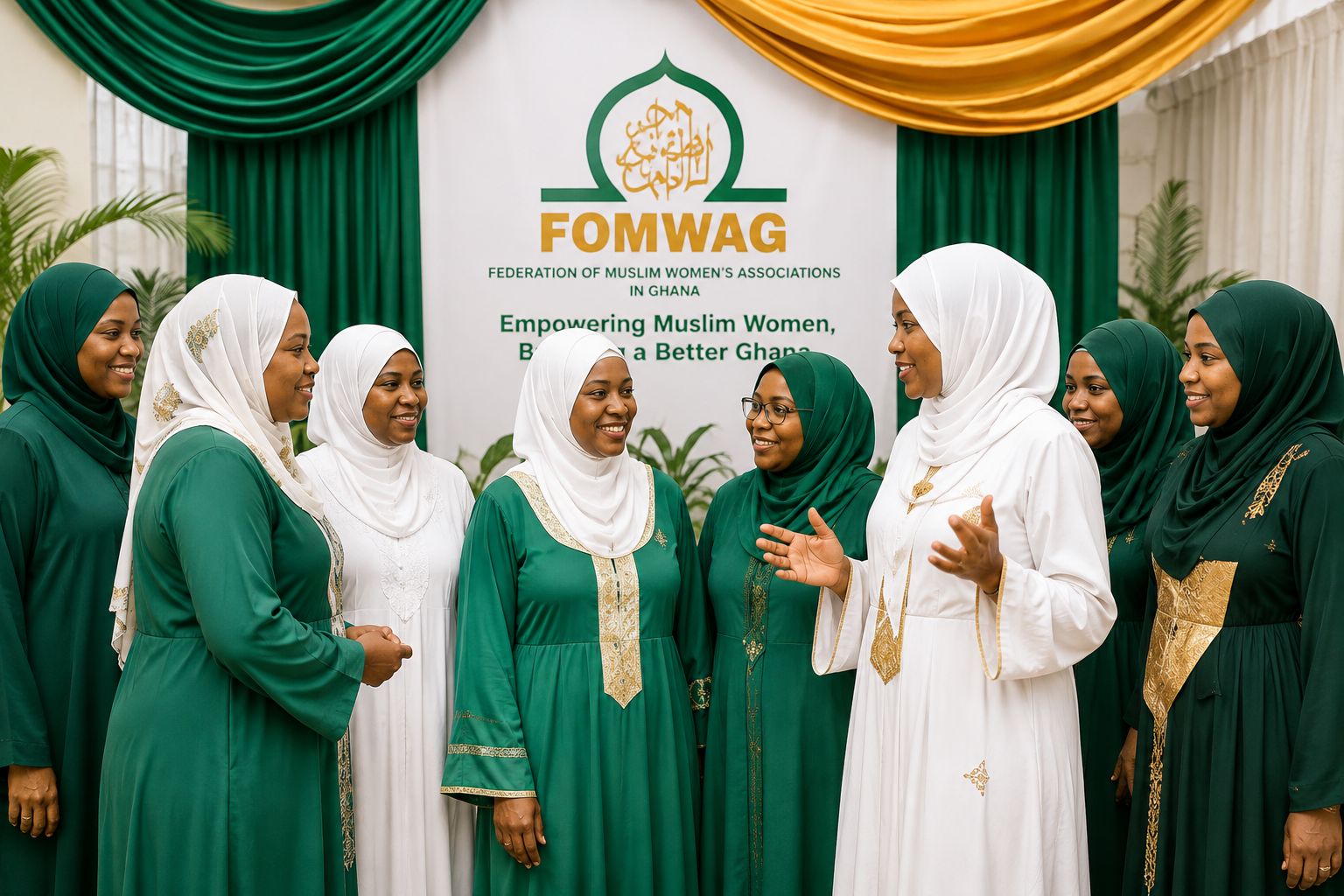
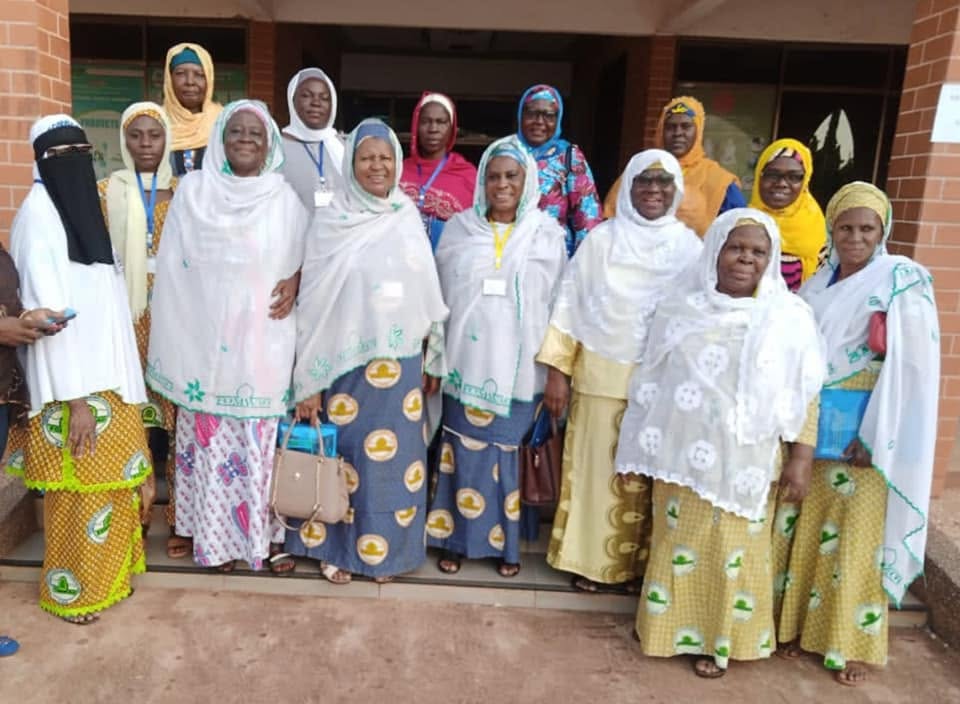
Each level has precisely defined roles filled by association members, enabling FOMWAG to maintain strong connections with local Muslim populations while coordinating nationwide initiatives. The organisation's activities consistently mirror this structural design, with programmes and events being implemented at all levels simultaneously, thereby reinforcing FOMWAG's identity as a genuinely grassroots movement that remains responsive to local needs while maintaining national cohesion.
This well-articulated hierarchy allows FOMWAG to engage effectively with both community-specific concerns and broader national issues. By distributing leadership responsibilities across multiple geographic and administrative levels, the association ensures representation of diverse Muslim communities throughout Ghana. The structural clarity facilitates efficient decision-making processes while maintaining the flexibility to address local priorities, making FOMWAG's operations more impactful than previous organisational models that lacked this comprehensive reach. Regular activities organized at each tier of the structure demonstrate the practical implementation of this framework, creating a dynamic interplay between local initiatives and national objectives that strengthens the entire Muslim women's movement in Ghana.
The formal establishment of FOMWAG in 1997 gained critical momentum through the support of Mrs. Nana Konadu Agyemang Rawlings,
Ghana's First Lady and founder of the influential 31st December Women's Movement. This high-profile endorsement ensured FOMWAG's
rapid acceptance as the authoritative voice for Muslim women's affairs in Ghana.
The Federation of Muslim Women’s Associations in Ghana (FOMWAG) was established to
unite Muslim women across Ghana, empowering them through education, advocacy, and
socio-economic initiatives.
Copyright © FOMWAG – All rights reserved.